




Heritage, the human dimension
The primary focus of conservation is on the physical components of our built heritage, but we must also consider what it is that we are seeking to conserve, and why.
Conservation measures range from the development of statutory protection and the listing of buildings to physical interventions such as repairs and adaptations. In executing any of these measures we generally take a relatively objective approach, so where alterations and repairs are required, our aim is to retain as much of the historic fabric as possible with the least amount of alteration.
This conservative approach to historic fabric arose, as we all know, from the pioneering work of William Morris and others in the late 19th century. Most Victorian architects took a more subjective approach to our heritage, retaining historic fabric where it fitted their sense of history, while removing later additions and those elements that didn’t, before adding new stuff in their preferred historical style. The results are particularly visible in the medieval church buildings they ‘restored’.
In the backlash which followed, strict principles were introduced that still underpin conservation today, but the objectivity is more tempered. Historic fabric is still the primary focus of conservation, but concepts such as significance give weight to people’s perceptions and values. Indeed, the term heritage itself emphasises the human dimension – the stuff handed down from previous generations that is of value, and that we would wish to hand on to the next. Like the sound in the forest that nobody hears, it is questionable whether heritage exists without human perception and engagement.
Both heritage and significance rely on value systems, and those values may extend beyond the fabric to include intangible aspects of heritage, such as a building’s association with a major historical event or character. There are values that we ascribe to works of architecture, just as we ascribe values to a fine painting or a piece of music. Historic England uses four sub-categories to help assess the value of a place to us:
- Evidential value: the potential of a place to yield evidence about past human activity.
- Historical value: the ways in which past people, events and aspects of life can be connected through a place to the present.
- Aesthetic value: the ways in which people draw sensory and intellectual stimulation from a place.
- Communal value: the meanings of a place for the people who relate to it, or for whom it figures in their collective experience or memory.
People are thus neatly woven into the fabric of the conservation process. In practice, this means that when considering how best to conserve a building it might not be enough to look at protecting fabric alone, but also its values. For example, a work of art may lose much of its significance if it has been disfigured to the point where its content and composition can no longer be read. If repairs are not necessary to preserve the existing fabric, would they be appropriate to restore legibility? From a strictly objective perspective these repairs might be considered to be unjustifiable, but at a human level the artwork in its current condition retains limited aesthetic value beyond the information it retains about what it once was, and what it could be if repaired. In the case of architectural works and places, the repairs can often be made in ways that are both reversible and discernible, allowing the existing fabric to be preserved and its significance, perhaps, enhanced.
The phrase ‘to preserve or enhance’ appears in conservation area protection systems in each of the four home nations, but it is a controversial concept, and its inclusion in England’s NPPF was objected to by the Society for the Protection of Ancient Buildings (SPAB). Part of the problem is that it can be used to justify alteration and restoration work that creates a pastiche of what was once there, reducing the significance of the surviving fabric. However, each case is unique and there are often many different design solutions to consider, each respecting the requirements of the owners and the significance of the historic fabric in different ways. Often the most successful approaches are a compromise. As one of the SPAB’s pioneers AR Powys noted in the preface to The Repair of Ancient Buildings, “I have found that it is not wise to lay down dogmatic rules, for when they are made one is apt to be confronted with a case where they do not work” (AR Powys, 1929.)
Most historic buildings and places need to adapt over time if they are to remain viable and valued, and in some form of functional use. When working on their repair and conservation it is important not to lose sight of the values and needs of those who live or work in the place, and those who will do so in the future. Heritage conservation is not just about buildings and places, but everything that happens in them. It is about people as well as place.
This article originally appeared in the Institute of Historic Building Conservation’s (IHBC) Yearbook 2021, published by Cathedral Communications Limited in 2021. It was written by Jonathan Taylor, editor of the Yearbook, The Building Conservation Directory and other publications. He is a director of Cathedral Communications and has a master’s degree in architectural conservation.
--Institute of Historic Building Conservation
Related articles on Designing Buildings
- Conservation area.
- Conservation as care.
- Conservation.
- Heritage value.
- Heritage.
- IHBC articles.
- Institute of Historic Building Conservation.
- Value in the view: conserving historic urban views.
- Value.
- Values in Heritage Management: Emerging approaches and research directions.
- Who do heritage values belong to?
IHBC NewsBlog
IHBC sponsors Gardens Trust event 23-4 Sept 2026
.jpeg)
'Learning from the Past, Shaping the Future’ takes place in Milton Keynes
Renovations to Frank Lloyd Wright's Fallingwater complete
.jpg)
World Heritage Preserved project opens house for tours again
Shakespeare Birthplace Trust places Hall's Croft on HAR Register
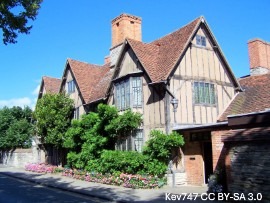
Stratford-upon-Avon home of Shakespeare's daughter is 'At Risk'
Lady Grange’s House repaired on St Kilda
.jpg)
National Trust for Scotland repairs stone cleit with link to famous island resident
Griff Rhys Jones on BBC Radio 4 Today programme
,_Green_Lane,_Derby.jpg)
The Victorian Society’s President unveiled its latest Top Ten Endangered Buildings 2026.
Need a MATE? Book your place now.
IHBC offers free webinars on applying for IHBC accreditation (Full & Associate).
UK Stained Glass Repository finds windows new homes
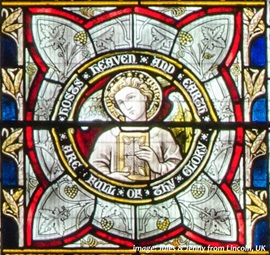
How are stained glass windows are rescued, stored and repurposed?
APPGEBE report sets high aims for quality
'Government must not sacrifice quality in drive to build 1.5m homes'
New measures protect Historic Shipwrecks from heritage crime

Underwater cultural heritage benefits from new HE guidance
How could the City of London skyline look in 6 years' time?

Visualisation shows approved planning applications as completed buildings
National Trust for Scotland calls for VAT cuts
Heritage neglect is encouraged by current policies
IHBC's 'Context' Issue 186 features Industrial Heritage
IHBC's members' journal reports on the challenges of conserving infrastructure
Book now for IHBC Annual School 2026
IHBC Annual School is taking place 18-20 June 2026 in Newcastle
RICHeS Research Infrastructure offers ‘Full Access Fund Call’
RICHeS offers a ‘Help’ webinar on 11 March
Latest IHBC Issue of Context features Roofing
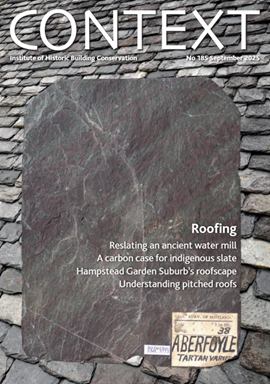
Articles range from slate to pitched roofs, and carbon impact to solar generation to roofscapes
Three reasons not to demolish Edinburgh’s Argyle House

Should 'Edinburgh's ugliest building' be saved?
IHBC’s 2025 Parliamentary Briefing...from Crafts in Crisis to Rubbish Retrofit
IHBC launches research-led ‘5 Commitments to Help Heritage Skills in Conservation’
How RDSAP 10.2 impacts EPC assessments in traditional buildings

Energy performance certificates (EPCs) tell us how energy efficient our buildings are, but the way these certificates are generated has changed.